



Dates and Times
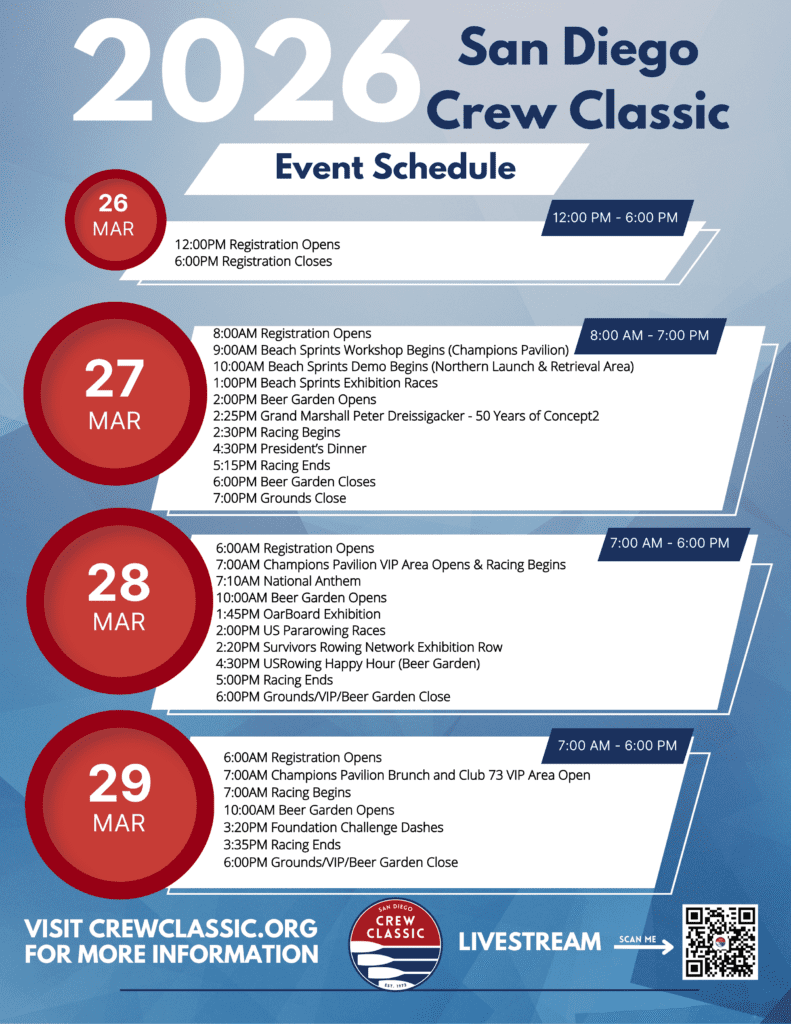
Timing and results brought to you by Regatta Master. All race results will update in real-time.
The Crew Classic Brunch offers guests a luxurious tented location in which to watch the boats cross the finish line. Brunch patrons will enjoy a delicious gourmet brunch, hand crafted espresso coffees and artisanal cocktails (21+). The brunch tent offers an unparalleled view of the finish line with comfortable seating indoors or out, in addition to the multiple screens inside the tent featuring the regatta live stream. Athletes in rowing blazers and ladies in hats add to the event’s festive atmosphere. We hope you join us for this very special day!
A portion of Brunch by the Bay ticket sales will support the Crew Classic’s mission of developing and promoting rowing programming in the Southern California region.
The Crew Classic’s VIP tents are perfectly situated at the finish line for excellent race viewing. This is the place to meet up with teammates, family and friends. Coffee will be served all day and you can grab a bite to eat from our food trucks and enjoy your meal while sitting in the shade watching the races start to finish on the monitors within the tent. Beer, cider and wine will be available for purchase for 21+ guests with ID.
The VIP tents will be open to all ages.
For guests who want a weekend VIP experience excluding the Brunch By the Bay, the Club 73 tent offers Sunday VIP amenities in a secondary location directly adjacent to the Champions Pavilion. VIP Guests will still have excellent views of the finish line and awards paddock, monitors showing the live stream, shaded seating, and a no-host bar with beer, wine and cider for guests 21+ with ID.
The VIP tents will be open to all ages.
A favorite Crew Classic tradition! The Beer Garden is the perfect spot to sit and watch the races while enjoying local craft beer. The Beer Garden is situated near food vendors, restrooms and the Jumbotron, across from Alumni Row. The Crew Classic enforces a strict 21+ policy–no minors are allowed inside the Beer Garden. Guests will be required to wear a wristband and present ID to enter the Beer Garden.
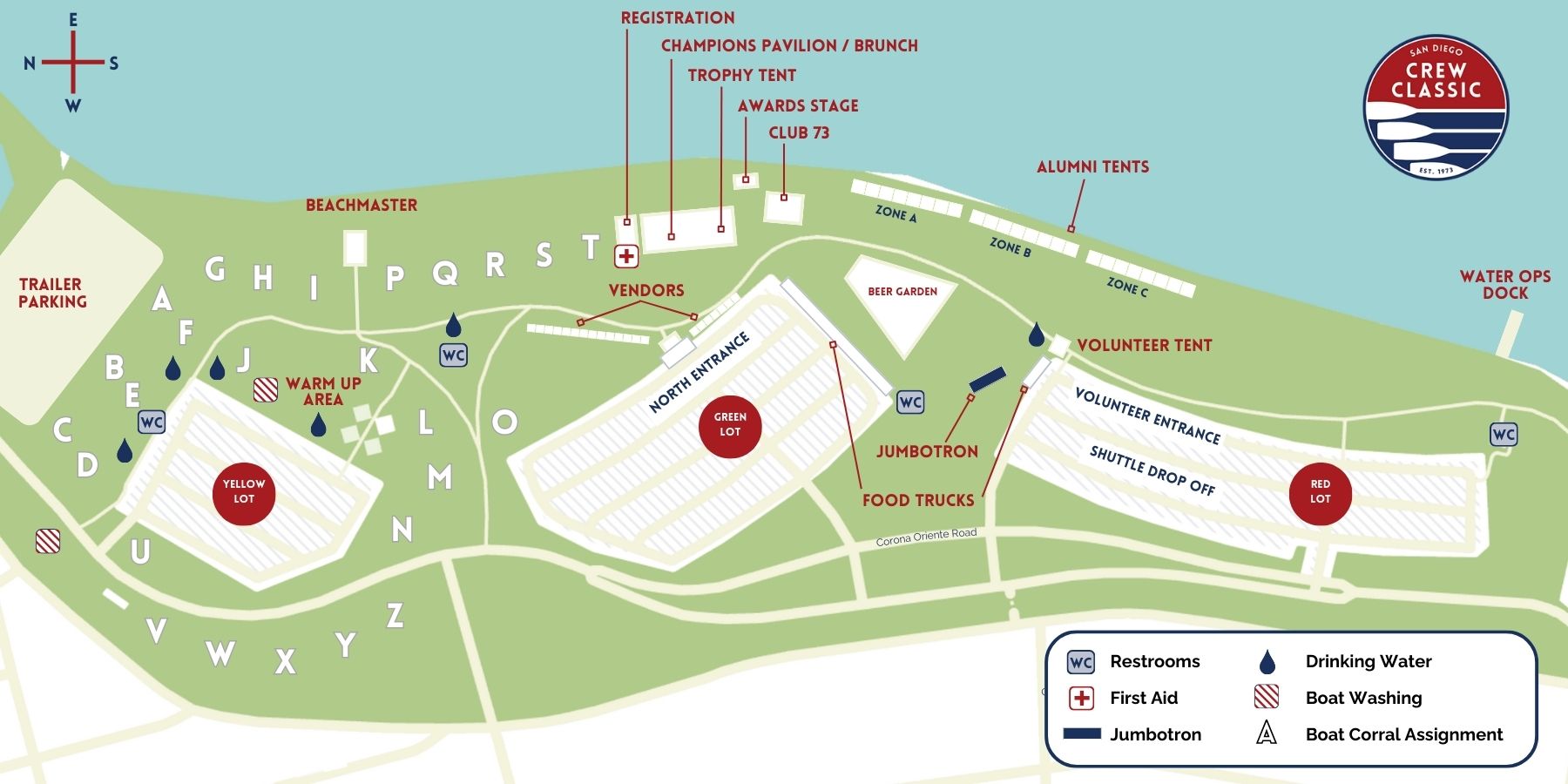
Free parking is available at Crown Point Shores–with the exception of the Northern (YELLOW) Lot–on a first come, first serve basis. Please be mindful of regatta operations setups in the parking lots when parking your vehicle and do not block equipment or machinery. Disabled parking spaces are marked and available first come, first serve. Park only in designated areas. Cars parked in no parking areas, including red curbs and fire lanes, may be ticketed or towed.
Additional free public parking is available south of the venue on Ingraham St. on Vacation Isle at Ski Beach. Please observe municipally posted signs in the lots at Ski Beach which define lots that are available to passenger cars. Failure to observe municipal signs may result in a citation from SDPD parking enforcement.
Corona Oriente Road will be closed between Moorland and the northernmost parking lot.
Friday: No shuttle
Saturday: 6:00am – 6:30pm
Sunday: 6:00am – 6:30pm
Address
3699 Crown Point Drive, San Diego, CA 92109 (map link)
From I-5
Head west on SeaWorld Drive, follow the signs for Ingraham Street. Free parking with a free shuttle is available at Ski Beach. Turn right at the stop light immediately after the first bridge.
To reach Crown Point Shores Park, turn right after the second bridge onto Crown Point Shores Drive. Take the first right to enter the park.
From I-8
Take the Ingraham/West Point Loma Blvd. exit and follow the signs for Ingraham Street. Free parking with a free shuttle is available at Ski Beach. Turn right at the stop light immediately after the first bridge. To reach Crown Point Shores Park, turn right after the second bridge onto Crown Point Shores Drive. Take the first right to enter the park.

Funded in part with City of San Diego Tourism Marketing District Assessment Funds.
Website + Hosting by John Wolfe Compton